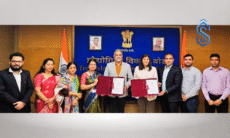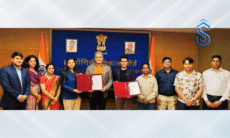

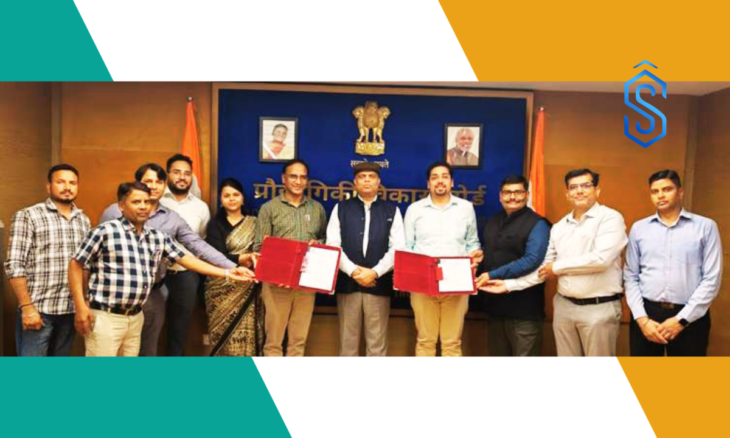
New Delhi: The Technology Development Board (TDB), under the Department of Science & Technology (DST), Government of India, has extended financial assistance to Indigenous Energy Storage Technologies Private Limited for the commercialization of advanced battery materials.
This initiative marks a significant step in advancing Indigenous Energy Storage Technologies aimed at strengthening India’s self-reliant and sustainable energy ecosystem.
The project, titled “Commercialization of Bio-waste / Agricultural Waste Derived Hard Carbon for Sodium-Ion Batteries,” focuses on establishing indigenous capabilities for producing advanced anode materials.
By enabling Indigenous Energy Storage Technologies, the initiative seeks to accelerate the development of cost-effective and environmentally sustainable energy storage solutions across the country.
The TDB-supported effort will enable commercial-scale production of hard carbon derived from bio-waste and agricultural residues.
This material will serve as a critical anode component in sodium-ion batteries (SIBs), positioning Indigenous Energy Storage Technologies at the forefront of next-generation battery innovation.
Indigenous Energy Storage Technologies: Enhancing Sustainability and Reducing Reliance on Imported Materials
Sodium-ion battery technology is increasingly emerging as a viable alternative to traditional lithium-ion systems. With growing demand for energy storage across sectors, Indigenous Energy Storage Technologies are expected to play a vital role in applications such as grid-scale storage, UPS and inverter systems, solar street lighting, and low-speed electric mobility solutions including e-rickshaws, e-scooters, and e-cycles.
Hard carbon, a specialized carbonaceous material, offers several advantages in sodium-ion battery applications. These include high initial coulombic efficiency, stable cycling performance, and improved energy storage capacity.
Unlike graphite, hard carbon maintains a disordered microstructure and porosity even at elevated temperatures, making it particularly suitable for sodium-ion chemistry.
The integration of biomass-derived precursors further strengthens Indigenous Energy Storage Technologies by enhancing sustainability and reducing reliance on imported materials.
The project introduces a circular and resource-efficient model by leveraging agricultural and bio-waste streams. This approach reinforces Indigenous Energy Storage Technologies by utilizing locally available resources while addressing critical supply chain challenges. Compared to lithium, sodium and carbon are more abundant and geographically distributed, reducing exposure to global supply risks.
Also Read: MiniMines Cleantech Solutions to Build Commercial Facility for Lithium-ion Battery Recycling
With TDB’s support, Indigenous Energy Storage Technologies Private Limited aims to scale up its production capabilities and accelerate commercialization.
This advancement in Indigenous Energy Storage Technologies is expected to enhance India’s position in next-generation battery technologies while promoting sustainable and resilient manufacturing practices.
Speaking on the occasion, Rajesh Kumar Pathak, Secretary, TDB, stated that the development of alternative energy storage technologies is critical for India’s clean energy transition.
He emphasized that initiatives centered on Indigenous Energy Storage Technologies, particularly those utilizing waste-to-value approaches, are essential for building a robust and self-reliant battery ecosystem.
Promoters of Indigenous Energy Storage Technologies Private Limited expressed their appreciation for the support, noting that the project will enable faster commercialization of sustainable battery materials.
They added that strengthening the company will contribute significantly to the development of affordable, scalable, and environmentally responsible energy storage solutions.